
Ware County Court Docket Basics
A docket is the court's chronological case log. In Ware County, a docket can list the case number, parties, filing dates, scheduled hearings, motions, orders, continuances, judgments, sentencing, notices, returns, warrants, and bond events. The docket helps a reader see what has happened and what may be scheduled next. It is not the same as the full court record, which can include pleadings, exhibits, certificates, sealed filings, and certified copies.
Ware County docket access is channel-based because court authority is divided among Superior Court, State Court, Magistrate Court, Probate Court, Juvenile Court, Municipal Court, and federal courts. Superior Court is the general-jurisdiction trial court in the Waycross Judicial Circuit. State Court handles misdemeanors, traffic violations, warrants, preliminary hearings, and civil matters not reserved for Superior Court. Magistrate Court handles lower-dollar civil claims and common warrant or first-appearance functions. Probate Court has its own case and calendar categories.
Find Ware County Court Dockets
There is no official Ware County page that exposes one public docket screen for every Superior and State Court case. For Superior and State Court dockets, contact the Clerk of Superior Court through the Ware County court-system page. For probate dockets and calendars, use Georgia Probate Records or call Ware Probate Court. Magistrate civil e-filing has a credentialed login screen, so public users usually need the Magistrate Court office for docket status.
Written requests are useful when the docket is not visible online. Georgia Attorney General guidance says open-records requests should go to the agency custodian, and written requests help document the scope, date range, and timing. For Ware County dockets, that means sending the request to the office that holds the file rather than to county administration by default. Superior and State Court docket questions go to the Clerk of Superior Court, probate calendar questions go to Probate Court, and city ordinance or municipal traffic questions go through City of Waycross channels.
- Read the citation, notice, filing, or court paper to identify whether the matter is Superior, State, Magistrate, Probate, Municipal, or federal.
- Use party names, case number, case type, and date range when calling or writing the clerk.
- For probate matters, choose the Georgia Probate Records category for estates, wills, guardianships, miscellaneous filings, hearings, or traffic calendars.
- For Waycross city ordinance or municipal traffic matters, use City of Waycross channels because those dockets are not county clerk case files.
- For federal district or bankruptcy cases tied to Ware County, use PACER, CM/ECF information, McVCIS for bankruptcy, or the federal clerk's office.
Ware County Docket Entry Fields
The research did not locate a public Ware Superior or State Court sample docket screen. The docket fields below reflect the official court-record inventory and the items a Ware user should be ready to request from the proper clerk. A docket entry is often enough to confirm activity, but the underlying document may still require a copy request or certification.
| Field | What It Shows |
|---|---|
| Entry date | The date a filing, hearing, order, notice, warrant, bond event, judgment, or sentence was added. |
| Event type | The kind of event, such as motion, order, arraignment, continuance, disposition, sentencing, or return. |
| Case number | The court identifier used to locate the docket and related documents. |
| Party or filer | The plaintiff, defendant, petitioner, respondent, State, attorney, or office tied to the docket event. |
| Hearing detail | Scheduled appearance, calendar event, or changed hearing status when available. |
| Disposition | The current or final case outcome, if the docket has reached that stage. |
| Document reference | A title or filing marker for the document that may need to be requested from the clerk. |
Ware County Dockets by Court
Ware County docket research should follow the court hierarchy. The Clerk of Superior Court manages Superior and State Court records. Probate Court has separate probate and calendar categories. Magistrate Court has a login path for civil e-filing but no open public docket sample was located. Juvenile records are restricted. City of Waycross matters can involve municipal court and police administrative services rather than the Ware County clerk.
- Superior Court handles felonies, divorce, broad civil matters, equity, and corrections or appeals from lower courts.
- State Court handles misdemeanors, traffic violations, search and arrest warrants, preliminary hearings, and civil matters not exclusive to Superior Court.
- Magistrate Court handles civil claims of $15,000 or less, warrants, bond, and first-appearance functions.
- Probate Court has estate, will, guardianship, marriage, miscellaneous, weapons carry, and hearing/calendar paths.
- Municipal Court functions may apply to Waycross ordinance and city traffic matters through city records or police administrative channels.
Dockets vs Ware Case Records
Ware County court dockets are useful for tracking status, but they should not be treated as a full file. A docket may show that a motion was filed, an arraignment occurred, a hearing was continued, or a judgment was entered. The full case record may contain the motion text, order, sentence, decree, exhibit, certificate, or filing that explains the entry.
| Docket | Full Case Record | |
|---|---|---|
| Format | Chronological list of events. | Filed documents, orders, judgments, and clerk copies. |
| Use | Track case progress and dates. | Read legal claims, rulings, evidence references, and certified outcomes. |
| Access | May be available through a clerk, calendar, portal, or office request. | Often requires document request, copy fee, certification request, or in-person review. |
| Limit | May omit sealed material or document text. | May still be redacted or restricted under law and court rules. |
Federal Dockets for Ware County
Federal matters involving Ware County are outside the county court system. The U.S. District Court for the Southern District of Georgia and the U.S. Bankruptcy Court for the Southern District of Georgia both list Waycross as a division location. Federal civil, criminal, prisoner, civil-rights, federal-question, diversity, and bankruptcy dockets are accessed through PACER, CM/ECF information pages, clerk terminals, or copy requests.
The PACER Southern District of Georgia bankruptcy lookup is one official route for bankruptcy docket access.
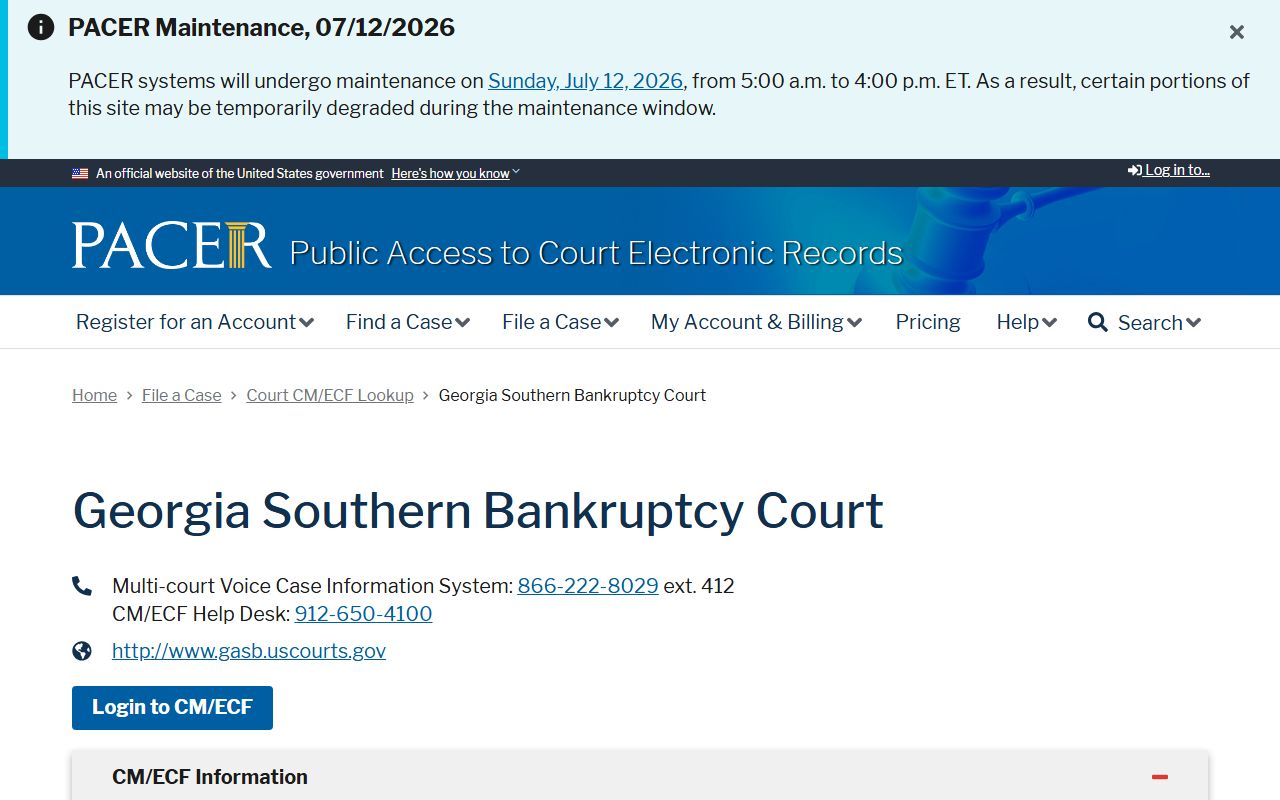
That federal docket route matters when the record is a bankruptcy case rather than a Ware County Superior, State, Probate, Magistrate, or Municipal Court file.
CourtListener can show some opinions and RECAP docket materials, but it is not the official court record.
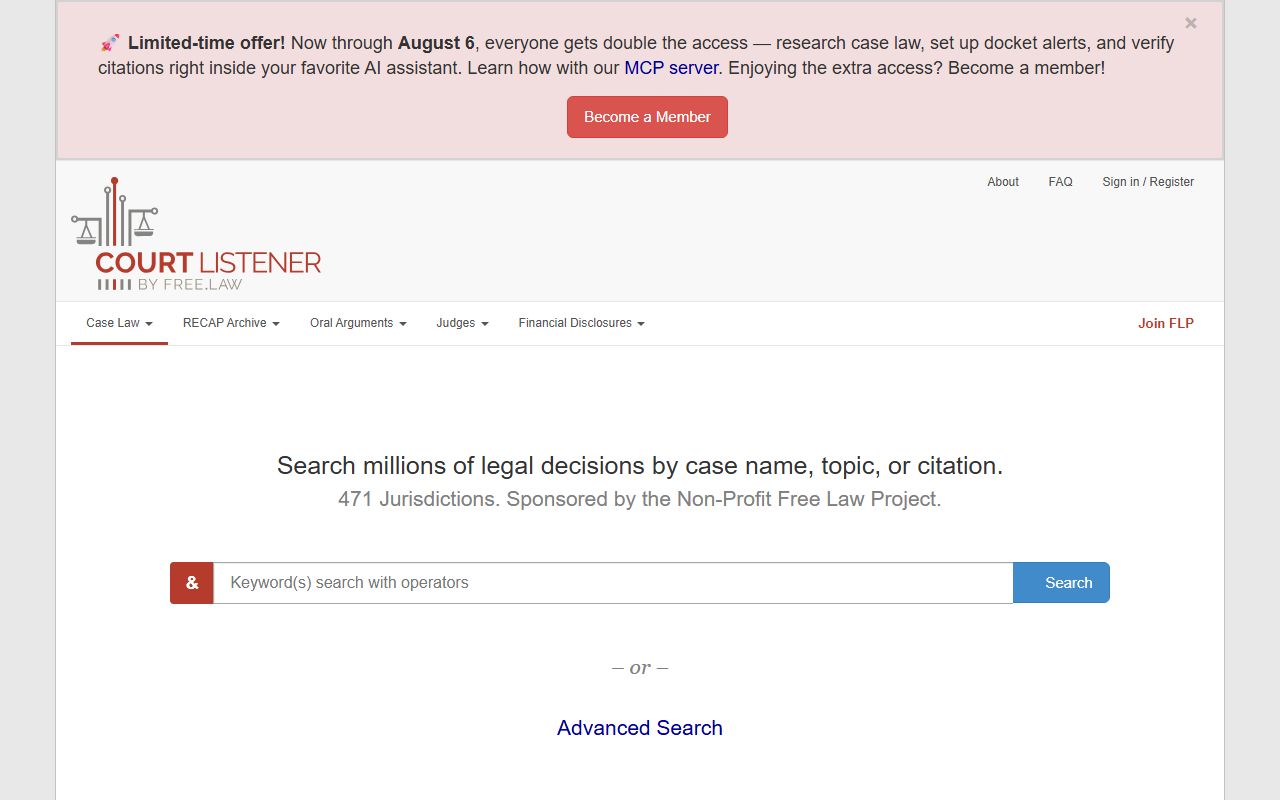
Use free secondary tools only as leads. Official federal docket copies and certified materials still come from federal court systems or clerk procedures.
Read Ware County Dockets
Docket terms are short because they are meant to log events, not explain the full legal effect. A motion is a request for a ruling. An order is a judge's directive. A continuance moves a hearing or trial. A disposition is the final or current outcome of a charge or case. A sentence is punishment ordered after conviction. A certified copy is a clerk-authenticated copy for official use.
Georgia access rules still matter when reading a docket. Public dockets can omit protected identifiers, juvenile material, sealed filings, adoption records, mental-health details, and restricted criminal-history information. If a docket entry looks incomplete, the missing detail may be inside a sealed document, a paper file, a nonpublic juvenile file, or a document that must be requested from the clerk.
Ware County dockets can also point to offices outside the clerk counter. A criminal docket may show bond or warrant activity that began in Magistrate Court. A misdemeanor or traffic docket may involve State Court and the Solicitor General. A felony docket may involve the Waycross Judicial Circuit District Attorney and, when appointed, the public defender. Those offices affect case movement, but the docket copy or certified case document still comes from the court custodian.
Note: A docket can confirm activity, but the clerk's document copy is the source for exact filing language.