
Ware County Criminal Case Files
Ware County criminal court records begin when a criminal matter reaches the court file. Superior Court criminal records include felony charging documents, indictments or accusations where applicable, pleadings, motions, pleas, verdicts, sentencing orders, probation terms, and disposition entries unless sealed or restricted by law. State Court criminal files include misdemeanors and traffic-related criminal matters. The Clerk of Superior Court manages Superior and State Court records, and the county clerk page identifies separate criminal clerk contacts for Superior Court criminal and State Court criminal work.
Georgia's court hierarchy matters for criminal records. Superior Court is the general-jurisdiction trial court and handles felony trials. State Court hears misdemeanors, traffic violations, search and arrest warrants, preliminary hearings, and civil matters not reserved exclusively to Superior Court. Magistrate Court can be involved at arrest, warrant, first-appearance, and bond stages. A booking entry or warrant number may lead to a case, but the full criminal court record is the court file. For the narrower charge path after arrest, see Ware County arrest records and court charges.
Search Ware County Criminal Court Records
Ware County has no official single public criminal case portal in the research. For Superior and State Court criminal court records, use the Clerk of Superior Court by phone, mail, or in person. Newer e-filed criminal documents may involve PeachCourt or Georgia e-file resources, but full access can be account-based. Jail booking data can help identify a defendant, warrant number, arrest date, charge description, and court, but the court case file and final disposition must be verified with the clerk.
- Identify whether the case is felony, misdemeanor, traffic-related criminal, municipal, juvenile, or federal.
- For Superior or State Court, contact the Clerk of Superior Court with defendant name, case number if known, approximate filing year, and charge or case type.
- Check PeachCourt or Georgia e-file resources only where the filing appears eligible and account access is available.
- Use jail roster charge fields as leads, not as final outcomes, because booking charges can change after prosecutor review.
- Request certified copies from the clerk when the criminal record will be used for court, licensing, immigration, or formal proof.
The Waycross Circuit prosecutor and public defender offices are not general record-search offices. The District Attorney files and prosecutes felony and circuit-level criminal matters, while the Solicitor General handles State Court misdemeanor and traffic prosecution. The Public Defender represents eligible indigent defendants and can help clients with their own pending cases, but it is not a public case-copy office.
Ware Criminal Case Stages
A criminal court record grows as the case moves through the court. The first public clues may come from an arrest, warrant, or booking, but the court record develops through charging papers, arraignment, motions, hearings, plea or trial activity, disposition, and sentencing. Some stages happen in Magistrate or State Court before a felony file is fully developed in Superior Court.
Case flow: Charges Filed › Arraignment › Pretrial / Motions › Plea or Trial › Disposition › Sentencing
| Stage | What Happens |
|---|---|
| Charges filed | The prosecutor or grand jury filing identifies the offense counts the court will track. |
| Arraignment | The charges are formally presented and the defendant enters a plea. |
| Pretrial / motions | Attorneys ask for rulings, evidence issues may be raised, and hearings or continuances appear on the docket. |
| Plea or trial | The case resolves by plea, verdict, acquittal, dismissal, or other disposition. |
| Sentencing | The court records jail, probation, fines, restitution, conditions, or other punishment after conviction. |
Ware County Criminal Record Fields
A Ware County criminal court record can include docket entries, filed documents, judgments, sentencing terms, fine or cost fields, and certification data. The record may also show attorneys, prosecutor activity, warrants, bond events, probation, and final disposition. Public copies may have redactions for protected identifiers, and juvenile or sealed material may not be released.
| Field | What It Shows |
|---|---|
| Case number | The local court identifier used by Superior Court, State Court, or another court. |
| Defendant | The person charged in the criminal case. |
| Charges | The offense counts as filed, amended, reduced, dismissed, or otherwise resolved. |
| Plea | The defendant's response, such as guilty, not guilty, or another plea entry. |
| Docket entries | Hearings, motions, orders, continuances, warrant events, bond events, and sentencing entries. |
| Disposition | The current or final outcome of the case or charge. |
| Sentence | Jail, probation, fines, costs, restitution, and conditions ordered after conviction. |
Ware Charges vs Convictions
A charge is an accusation in a criminal case. A conviction is an outcome after a guilty plea, verdict, or other finding that meets the legal standard. Ware County criminal court records can show charges that were dropped, dismissed, reduced, amended, or resolved without conviction. That distinction is important when reading a docket or jail roster because a booking charge may be the starting point rather than the final court result.
| Charge | Conviction | |
|---|---|---|
| Stage | Accusation or count filed after arrest or prosecutor review. | Outcome after plea, verdict, or qualifying court finding. |
| Record effect | Can appear in booking, warrant, docket, accusation, or indictment records. | Can support sentence, probation, fines, and DDS or criminal-history reporting where applicable. |
| Change over time | May be amended, reduced, dropped, dismissed, or nolle prossed. | May later be appealed, corrected, or restricted only when law allows. |
Ware County Criminal Justice Offices
The Waycross Circuit Public Defender page identifies the public defender office serving Ware County and nearby southeast Georgia counties.
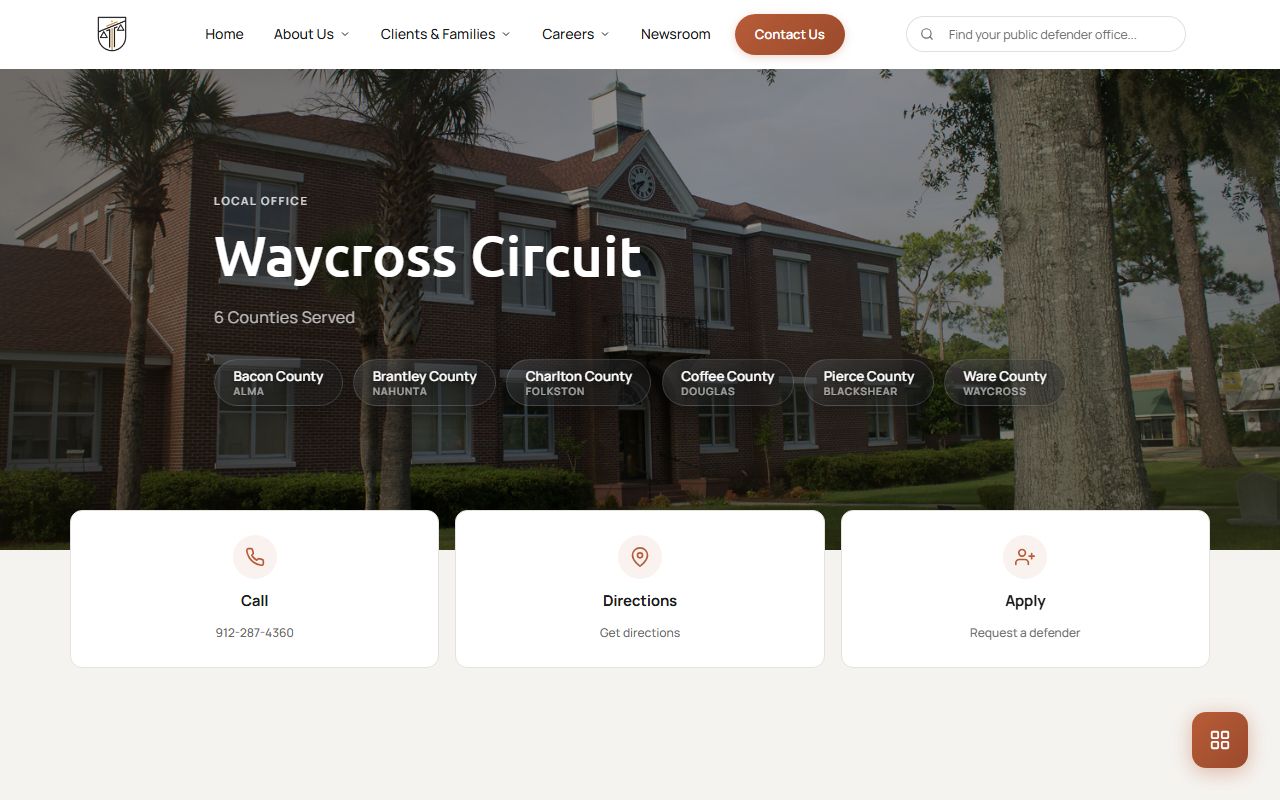
The public defender office is part of the criminal-case system, but criminal court records and certified case copies still come from the court clerk that holds the file.
The U.S. Attorney for the Southern District of Georgia handles federal prosecution, which is separate from Ware County Superior and State Court criminal records.
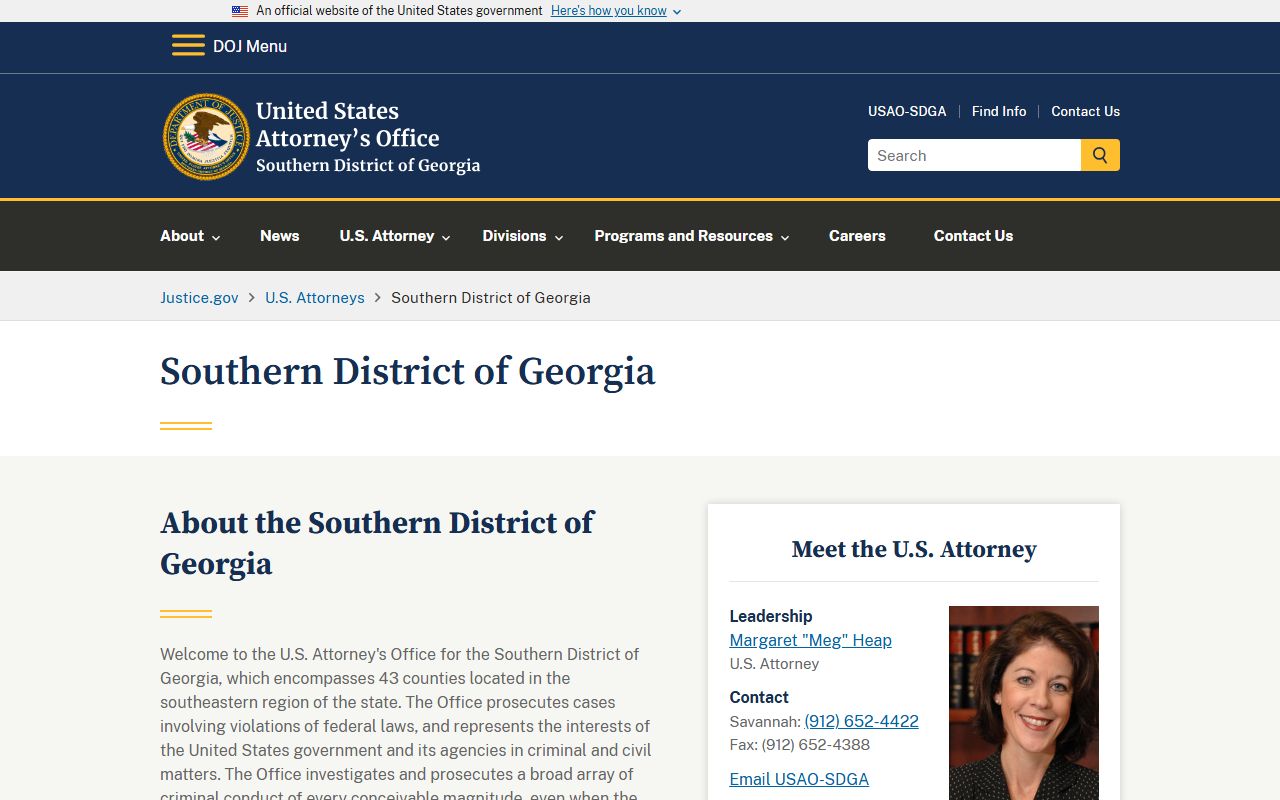
Federal criminal matters use federal docket systems and federal clerk procedures, even when the Waycross division or Ware County facts are involved.
Sealed and Restricted Criminal Records
Georgia uses record restriction for certain criminal history records rather than treating every eligible matter as a full erasure. The sheriff-linked GBI request-to-restrict form cites O.C.G.A. section 35-3-37 and requires prosecutor approval before GCIC can restrict a criminal-history record. The form also requires arresting agency information, SID or tracking data, charge tracking numbers, disposition, prosecutor action, and a non-refundable GBI fee after approval.
| Sealed | Record Restricted | |
|---|---|---|
| Visibility | Public access is limited by law, court order, or Rule 21 procedure. | Criminal-history access is limited when statutory and prosecutor approval steps are met. |
| Who acts | The court applies sealing law or a court order. | The applicant, arresting agency, prosecutor, and GCIC process the request. |
| Ware example | Juvenile, adoption, sealed court files, protected identifiers, and sensitive probate matters may be restricted. | The sheriff forms page links the GBI request-to-restrict arrest record process. |
Public Access to Ware Criminal Records
Criminal court records are public unless a law, court rule, exemption, or sealing order limits access. Georgia's Open Records Act sections 50-18-70 through 50-18-72 cover public-record policy, access, fees, and exemptions. Uniform Superior Court Rule 21 addresses public access to court records, while Rule 21.6 and O.C.G.A. section 9-11-7.1 address protected identifiers. Juvenile criminal matters, sealed cases, adoption-related filings, and protected personal data are not general public search material.
Key Statutes:
O.C.G.A. section 50-18-71 explains access, timing, and lawful copy or search costs for public-record requests.
O.C.G.A. section 35-3-37 controls Georgia criminal-history record restriction through the prosecutor and GCIC process.
Restricted Ware Criminal Court Records
Juvenile proceedings, sealed cases, adoption-related filings, protected identifiers, and some active investigative or warrant materials may be withheld from public release. A clerk may provide limited status or say a court order is needed. When a criminal record appears incomplete, the missing details may have been restricted by law rather than omitted by mistake. Verify final disposition with the originating court before relying on a docket entry, jail charge, or unofficial summary.